
Discovering Barcelona also means discovering its gastronomy. Beyond its monuments, beaches, and charming neighborhoods, the city offers a cuisine that reflects the essence of the Mediterranean and Catalan tradition. Simple recipes, made with local products and passed down from generation to generation, make every meal an important part of the trip.
Catalan cuisine stands out for its balance between sea and mountain flavors, the quality of its ingredients, and a wide variety of dishes that can surprise both first-time visitors to Barcelona and those already familiar with the city. From traditional recipes to more contemporary offerings, local cuisine is an integral part of Catalonia’s cultural identity and deserves a prominent place on any itinerary.
If you’re planning a trip to Barcelona, setting aside time to enjoy its culinary offerings is just as important as visiting the Sagrada Familia, strolling through the Gothic Quarter, or exploring Montjuïc. Below, we present some of the typical dishes of Barcelona and Catalonia that you shouldn’t miss during your stay.
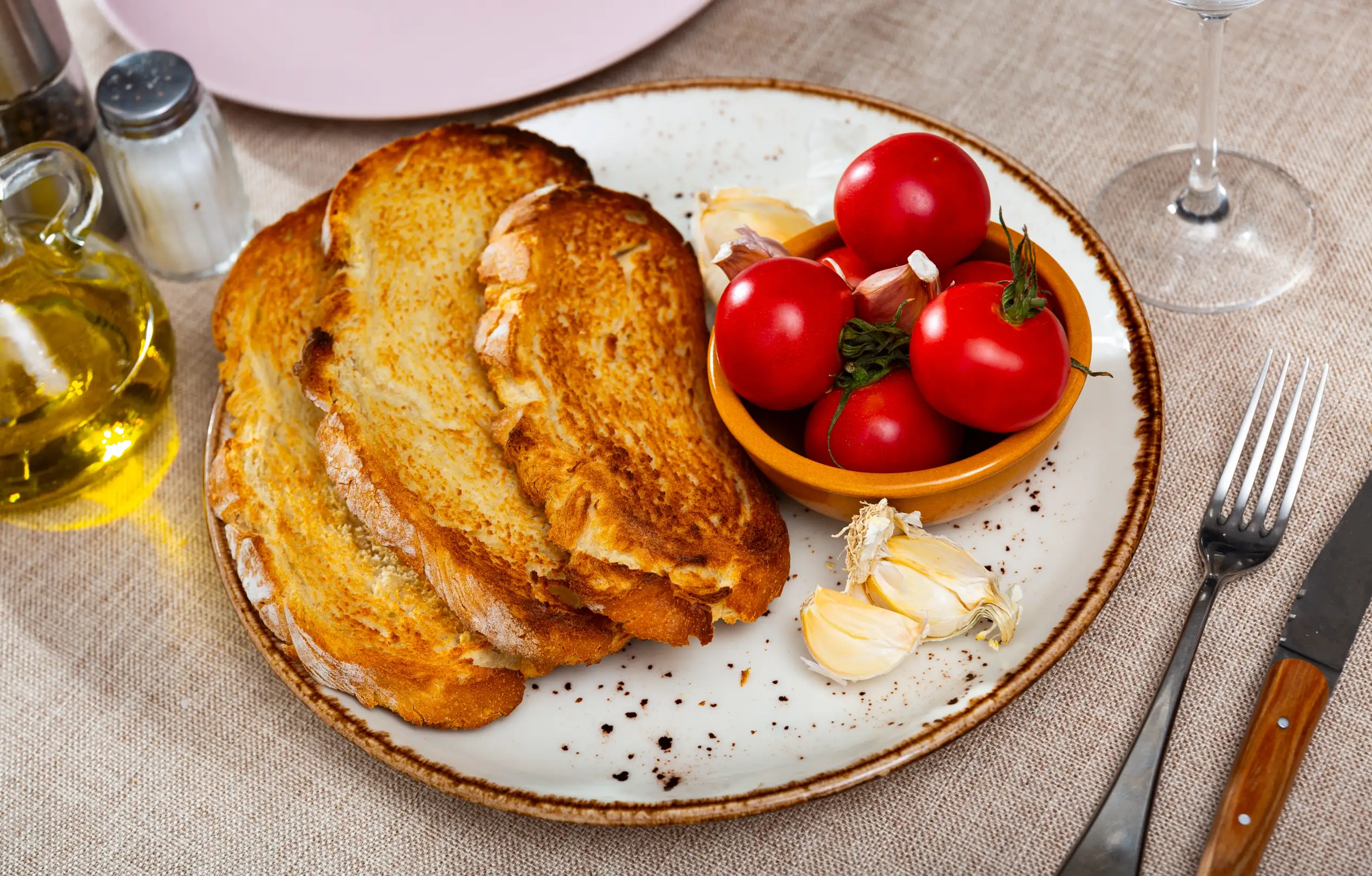
Pa amb tomàquet: the great symbol of Catalan cuisine
Few recipes represent Catalan gastronomy as well as pa amb tomàquet. Although its preparation is simple, the result depends on the quality of each of its ingredients: country bread, ripe tomato, extra virgin olive oil and a pinch of salt.
It is usually served as an accompaniment to cured meats, cheeses, or grilled meats, although it is also common to find it as an appetizer. Its popularity lies precisely in that simplicity which transforms an everyday product into one of the great icons of Catalan cuisine.
Trying a good pa amb tomàquet is an excellent way to start any meal and to get closer to one of the most deeply rooted gastronomic traditions of the region.
Escalivada: the taste of Mediterranean tradition
The escalivada is another essential dish of Catalan cuisine. Made with eggplant, red peppers, and onions slowly roasted, it stands out for its intense flavor and smooth texture.
It is usually served warm or cold, dressed with extra virgin olive oil and sometimes accompanied by anchovies or goat cheese. This recipe perfectly reflects the importance of vegetables in the Mediterranean diet and is especially appealing during the summer months.
Many restaurants in Barcelona include it as a starter or to share, making it an ideal option to begin discovering the most traditional flavors of Catalonia.
Cod esqueixada: freshness with Catalan essence
When the warmer months arrive, the esqueixada de bacalao It has become a staple on the menus of many restaurants. It’s a salad made with shredded, desalted cod, tomato, onion, black olives, bell pepper, and a generous dressing of extra virgin olive oil.
Its origins are linked to traditional Catalan cuisine, where cod has historically been one of the most widely used ingredients. Thanks to its freshness and simplicity, it’s a perfect recipe to enjoy during a summer meal while exploring the city.
Fideuá: a delicious alternative to rice
Although paella is usually one of the most sought-after dishes by those who visit Spain, in Catalonia there is a specialty that deserves the same prominence: fideuà.
Its preparation is similar to that of rice, but it substitutes rice with thin noodles that absorb all the flavor of the fish and seafood broth. Prawns, cuttlefish, mussels, or squid are common ingredients in this dish, which is traditionally served with aioli.
It is a highly recommended option for those who wish to discover Catalan seafood cuisine from a different perspective.
Although paella is usually one of the most sought-after dishes by those who visit Spain, in Catalonia there is a specialty that deserves the same prominence: fideuà.
Its preparation is similar to that of rice dishes, but it substitutes thin noodles that absorb all the flavor of the fish and seafood broth. Prawns, cuttlefish, mussels, or squid are common ingredients in this recipe, which is traditionally served with aioli.
It’s a highly recommended option for those who want to discover Catalan seafood cuisine from a different perspective.
Suquet de peix: the essence of the Mediterranean
The suquet de peix is one of the most historic recipes in Catalan cuisine. It originated among coastal fishermen, who used their daily catch to prepare a simple yet flavorful stew.
It is currently one of the most representative dishes of Catalan cuisine and can be found in numerous restaurants specializing in Mediterranean food. Depending on the establishment, it is prepared with monkfish, hake, prawns, clams, or mussels, always accompanied by a sauce made with tomato, garlic, and nuts that gives it a very distinctive flavor.
It’s a perfect option for those seeking an authentic gastronomic experience.
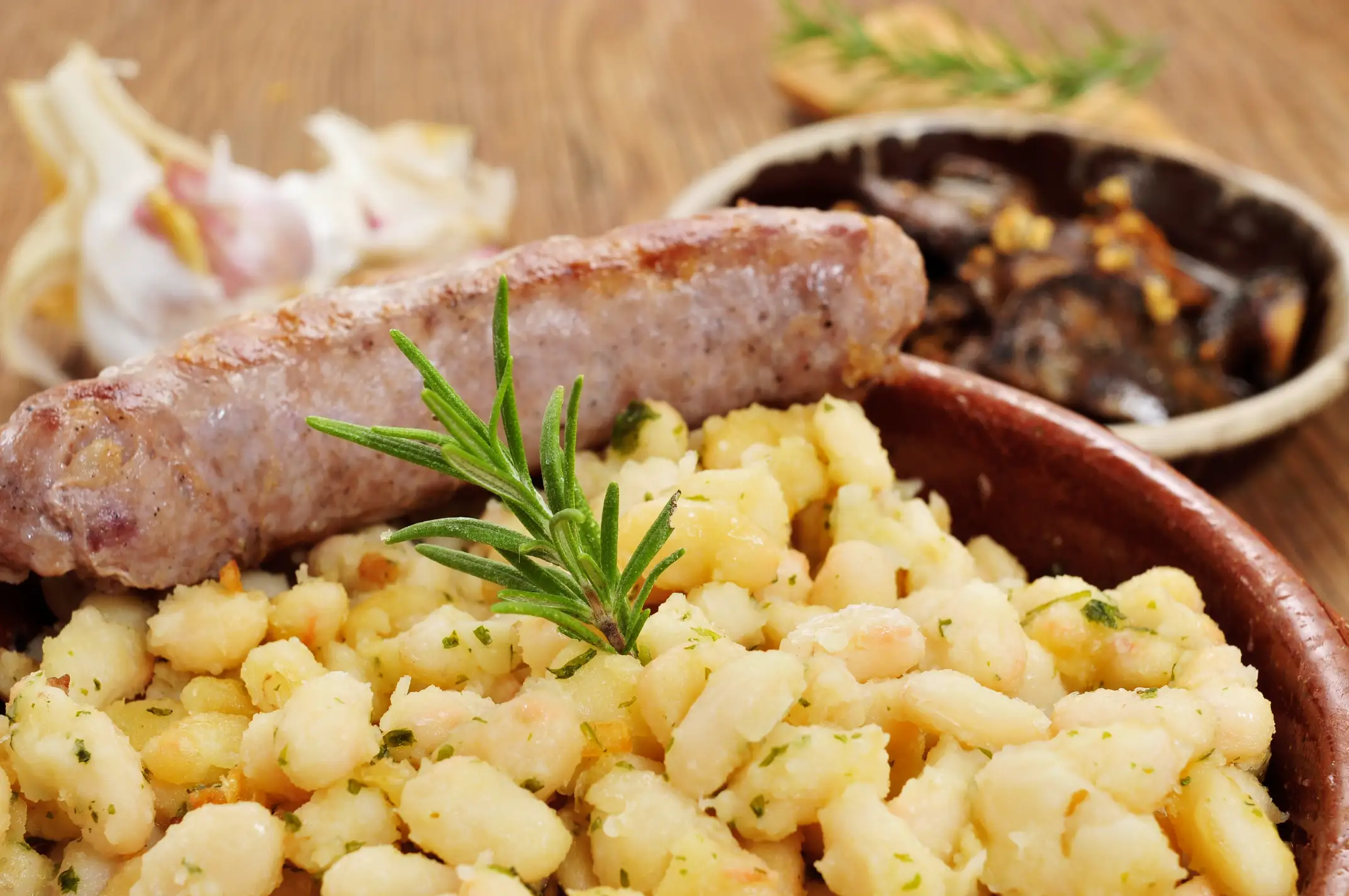
Butifarra with beans: a classic of Catalan cuisine
Catalan cuisine also features inland recipes that form part of its identity. One of the best known is the butifarra con mongetes, a combination of grilled sausage with sautéed white beans.
Although it is a simple dish, it perfectly represents the Catalan culinary tradition, based on quality products and unpretentious preparations.
It is common to find it in traditional restaurants and farmhouses, where it continues to be prepared following the traditional recipes.
Catalan-style cannelloni
Few people know that cannelloni They play a very important role in Catalan cuisine. Traditionally, they were prepared to use up leftover roast meat from the previous day, becoming the main dish for the Feast of Saint Stephen.
Today they can be enjoyed year-round, and each restaurant adds its own touch. Filled with meat and topped with a smooth, gratinéed béchamel sauce, they are a comforting recipe that forms part of Catalonia’s culinary heritage.
Crema Catalana: the quintessential dessert
No typical Catalan meal would be complete without trying crema catalana. Its characteristic caramelized sugar topping and creamy interior flavored with lemon and cinnamon make it one of the most famous desserts in Spanish cuisine.
Although often compared to French crème brûlée, crema catalana has its own distinct identity and a history stretching back centuries. Its balance of sweetness and texture makes it the perfect ending to any meal.
No typical Catalan meal would be complete without trying crema catalana. Its characteristic caramelized sugar crust and creamy interior flavored with lemon and cinnamon make it one of the most famous desserts in Spanish cuisine.
Although often compared to French crème brûlée, crema catalana has its own distinct identity and a history that stretches back several centuries. Its perfect balance of sweetness and texture makes it the ideal ending to any meal.
Where to try typical Barcelona dishes?
Barcelona offers a huge variety of restaurants where you can discover Catalan cuisine. From historic establishments to more innovative options, the city allows you to enjoy traditional recipes adapted to all tastes.
If you’re looking for a more authentic experience, it’s worth getting away from the tourist areas for a few hours and exploring neighborhoods with their own unique character, like Poble-sec.. This neighborhood, located next to Montjuïc, has established itself as one of the city’s great gastronomic landmarks thanks to the combination of traditional restaurants, taverns, tapas bars and contemporary cuisine.
Strolling through its streets is to discover small shops where local produce and cuisine remain the stars. The well-known Carrer Blai, famous for its pintxos and atmosphere, is just one part of the culinary offerings hidden in this neighborhood, ideal for those who want to experience a more authentic Barcelona.
An experience that can also be savored
Traveling is about discovering new places, but also about learning about local customs and culinary traditions. Trying the typical dishes of Barcelona and Catalonia is a way to connect with the local culture and make each meal another memorable part of your trip.
If during your stay you decide to stay in an area like Poble-sec, you’ll have the opportunity to combine exploring some of the city’s main attractions with enjoying high-quality cuisine. Hotel Grums, located just minutes from Montjuïc, the port and the center of Barcelona, allows you to easily access many of these restaurants and enjoy the city on foot, discovering charming corners and flavors that are part of the Catalan identity.
Because Barcelona isn’t just a place to visit. It’s also a place to savor through its cuisine. And every dish is an invitation to learn a little more about the history, culture, and essence of a city that always leaves you wanting to return.